When you hear the phrase “road trip” most people think about cruising down the highway with the sun shining, windows open, singing along to a playlist of your all-time favorite songs. Of course reality is often far different – cranky kids, bad directions, and a long list of other unexpected things can quickly derail an otherwise fun trip. One of the best ways to create the ideal road trip is to plan ahead. Some people love spontaneity, but when it comes to extended travel, devising a plan allows you to research all the options. This will maximize your time and save you a boat-load of money. That way once you’re in the car, all you need to do is throw on the sunglasses and turn up the radio.
These are the steps that my family took to plan our five week summer road trip.
- Determine the length of your trip. I put this first because most people have limited flexibility in planning for how long they want to stay on the road. The amount of time you have will be a major factor in determining how far you can go and how much time you will spend in each location. Unless you are retired (lucky!) or your job allows you to work from anywhere, you’ll probably need to be back home by a certain date. Because my husband and I both work in public education, we have about eight weeks of summer vacation to spend as we wish. However, we knew that we didn’t want to be gone ALL summer, so we decided that about five weeks would be perfect for our first extended family road-trip. Decide the number of days, weeks, or even months that will be right for you.
-
Decide on your destinations. Most people plan a trip with some idea of where they want to go. You may have only one destination in mind (Orlando, anyone?!) or you could have a list of places that you just HAVE to experience on this trip. Be sure that everyone traveling has a voice in this stage of the planning in order to maximize the excitement about the trip. For our family, we knew that we definitely wanted to go to Gettysburg, Washington DC, Great Smoky Mountain National Park, Mammoth Cave National Park, and Niagara Falls.
-
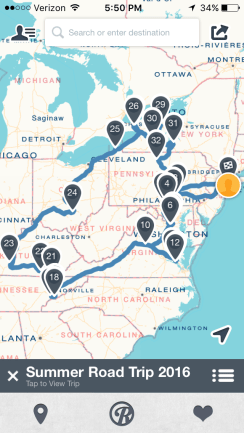 Download Roadtrippers App. Or you could go old school and grab a road atlas, but the Roadtrippers app has some seriously amazing features. Once you have created a name for your trip, you can add your major destinations. They app will provide you with the quickest route between locations, the amount of driving time to expect, the number of miles you’ll be traveling, and the estimated cost of gas for your trip. In our case, this showed that we would have some very long drives, and with two small children, we wanted to keep our drives between locations under five hours. So we began selecting some additional places to stay along the way to break up the drives. We added Jamestown and Colonial Williamsburg, the Cumberland Gap, Hocking Hills State Park in Ohio, Presque Isle State Park in Ohio along the shores of Lake Erie, Letchworth State Park in New York, Cherry Springs State Park in Pennsylvania, and we decided to finish out the trip with a couple of days in Hershey, Pennsylvania. No matter what your idea of a “long drive” is, discussing and deciding now will make it much easier to create an itinerary that you can stick to. And one last side note: Trying to take turns driving overnight and sleeping in the car sounds like a great way to cover many miles quickly, but it is VERY difficult and potentially dangerous.
- Build your budget. There are really two ways to do this. You can decide on a total amount that you are willing or can afford to spend on the trip and then make all of your plans based on that number OR you can estimate the total cost of all of the lodging, activities, food, gas, tolls, etc. and determine if that’s a number that you are willing to spend. Either way
- Explore and organize your options. Since lodging most likely take up the largest percentage of your budget, begin exploring your choices for each location. My family is tent camping, which is one of the least expensive ways to travel (and the only way we could afford to be gone for five weeks!), but its definitely not for everyone. Determine where you want to stay and start pricing the activities that you are likely to do in each location. I created the table in the link below, first with options for each, but as my husband and I made final decisions and reservations, I deleted the extra information. This is what we ended up with: 2016 Road Trip
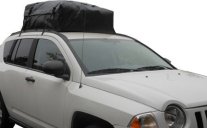
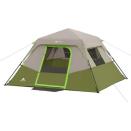 We received this tent as a gift , and it seems just perfect for us. The set up is almost too easy (isn’t part of camping supposed to be fighting with the poles?!) and there’s plenty of room for all of us to stretch out. It has several storage pockets and the rain cover is removable for those hot (but not rainy!) summer nights. I’ll have to update later this summer to share how it holds up with extended use.
 This was one area where I REALLY didn’t want to sacrifice quality. Not getting a good night’s sleep is a recipe for disaster on a trip like this, so Ryan and I grabbed the Light Speed sleeping pads when we saw them for a great price at Costco. These pads are really thick and sturdy. I mean, I still might miss my pillow-top mattress, but at least I won’t be waking up with a stiff back every morning. And because the boys are so much smaller and lighter, we bought the more compact and cheaper MultiMat Trekker pads for them. I love how all of the pads are self-inflating so we don’t need to drag around a pump or pass out blowing them up.
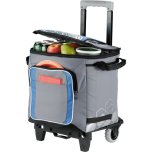 We weighed the pros and cons of several different coolers, and I’m still not convinced that we made the best choice for our trip. Space is a huge concern for us, and coolers can be really, really big. We ultimately decided on a really versatile, smaller cooler, since we plan on restocking groceries about every three days. Its is soft and can fold up when its not being used. It can also detach from the frame and be carried separately, so we can use it at the beach or for picnics. We also got it at Costco for about half the price that its going for on Amazon, so that helped us make the decision.
 On The Road Together